For more and more customers, choosing a dish is not just about the photo, the ingredients and the price.
Some want to know how many calories the product has.
Others track the amount of protein, sugar or salt.
And some simply want more transparency before they order.
A digital menu offers enough space for this information without turning the menu into a collection of hard-to-read tables.
Each product can have its own section
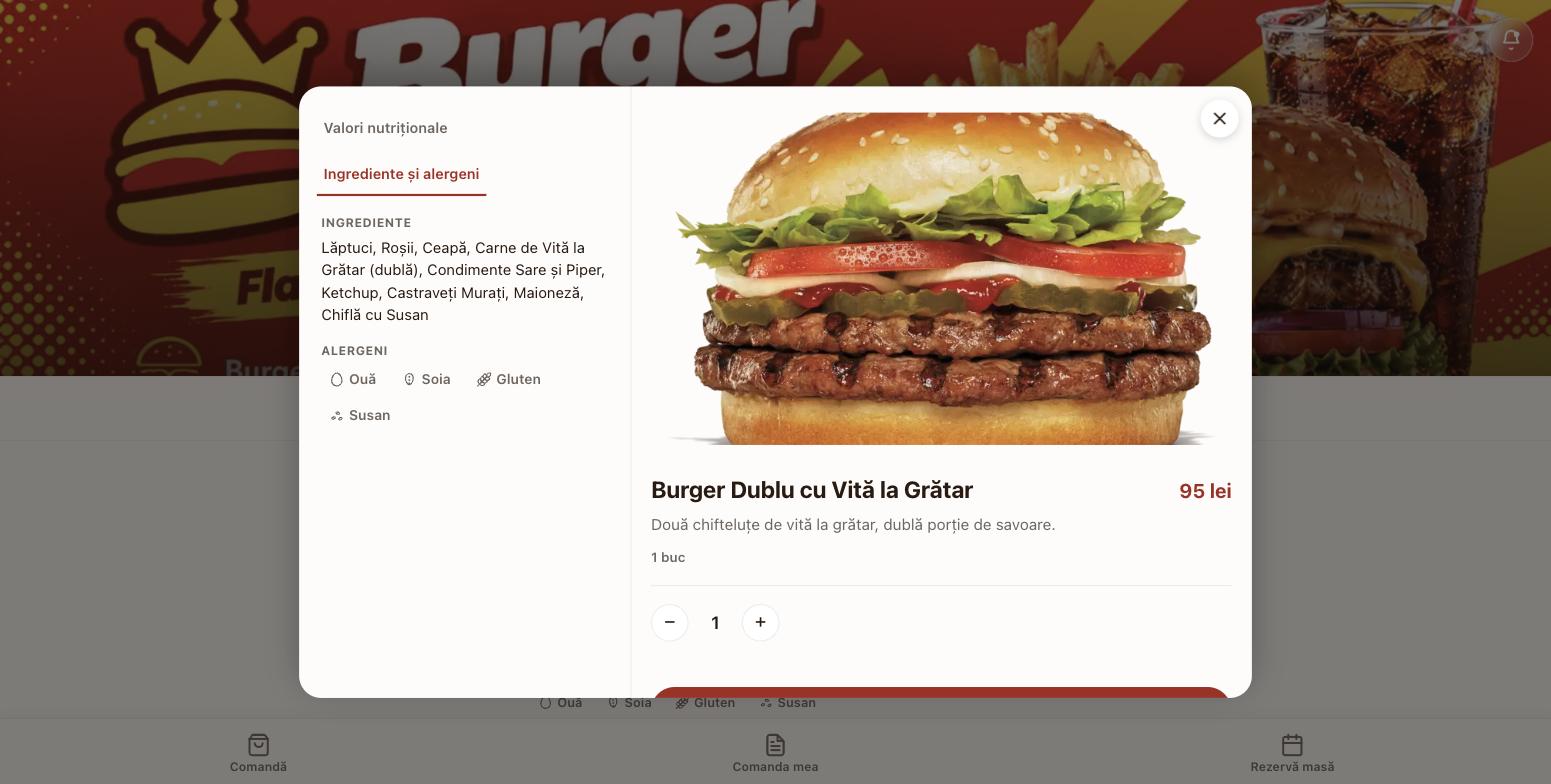
In Noha, the relevant information can be attached directly to the dish.
Depending on the data the restaurant wants or needs to present, it can include details such as energy value, fat, saturated fat, carbohydrates, sugars, protein or salt.
The customer accesses the information when they are interested.
The main menu stays simple and easy to browse.
Simpler than in a printed menu
Adding a lot of information to a classic menu quickly leads to crowded pages.
Fonts get smaller, and footnotes and extra tables appear.
In a digital environment, information can be organized in layers.
The customer first sees the product, the price and the description, and the additional details are available when they open the product.
Updates can be made from a single place
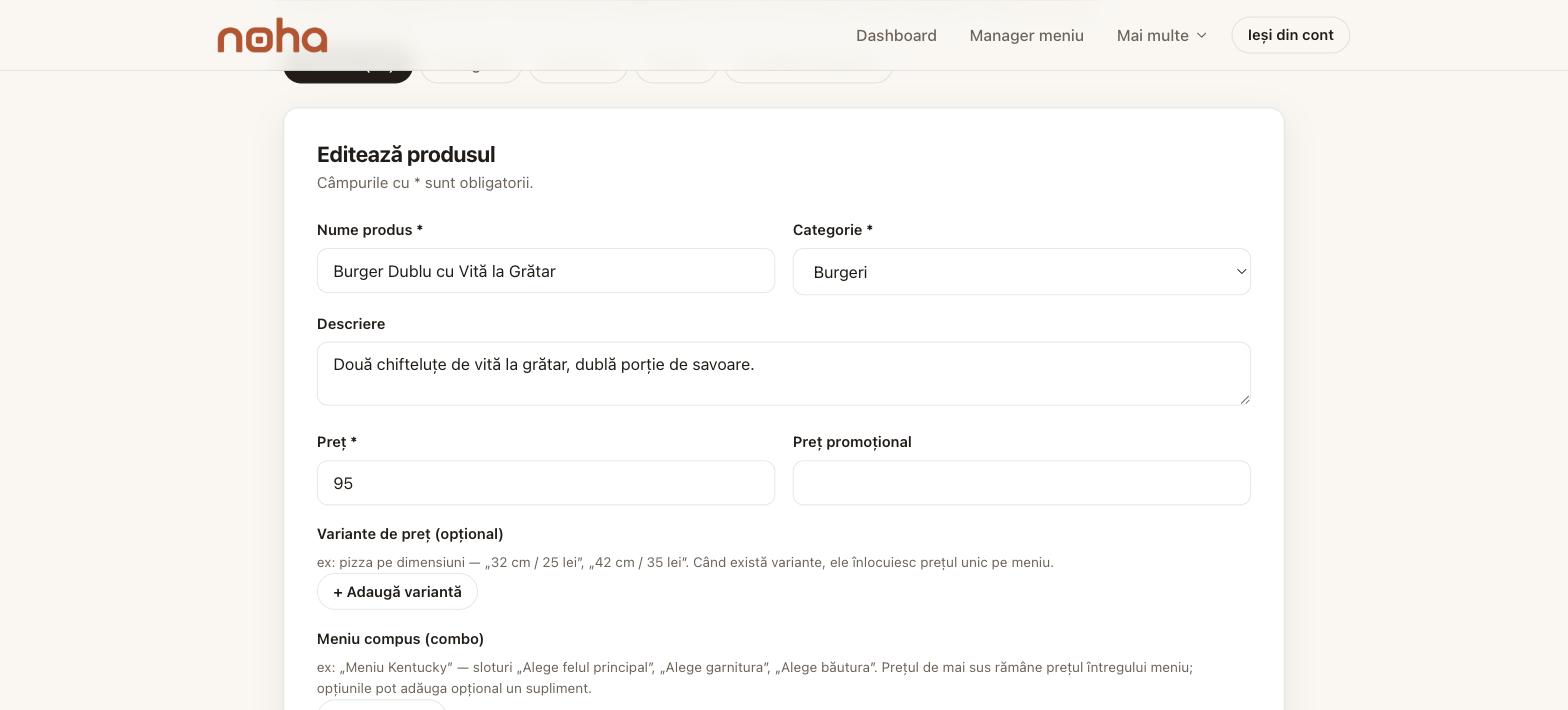
If the recipe or the portion size changes, the product information can be updated without reprinting the menu.
This is one of the fundamental differences between a static document and a manageable digital menu.
More information for the customer, without cluttering the ordering experience.