During busy hours, every minute counts.
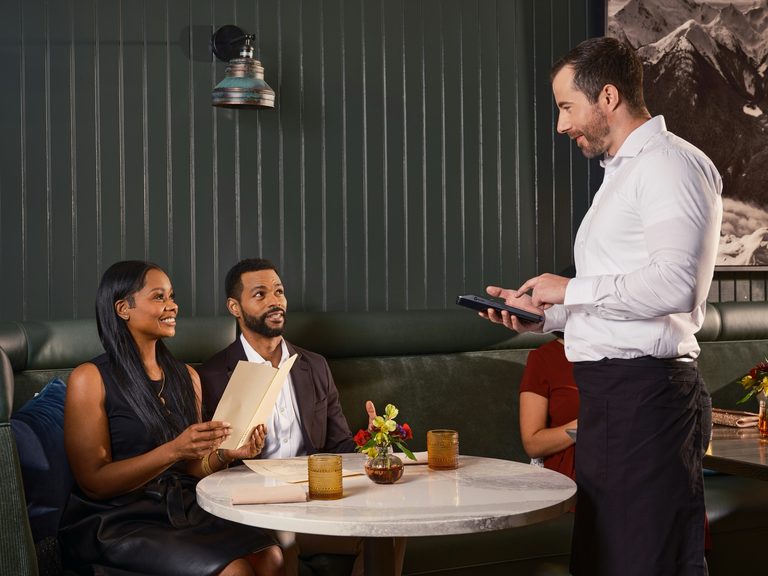
Waiters have to handle, at the same time, tables that have just sat down, customers who want to order, dishes ready to be served and people asking for the bill.
Often, the problem isn’t the number of employees, but the very large number of interactions they have to handle in a short time.
A table ordering system through a digital menu can remove some of these steps.
Customers can send their own order
After scanning the QR code, the customer can browse the menu straight from their phone.
They choose the products.
They select the available variants or options.
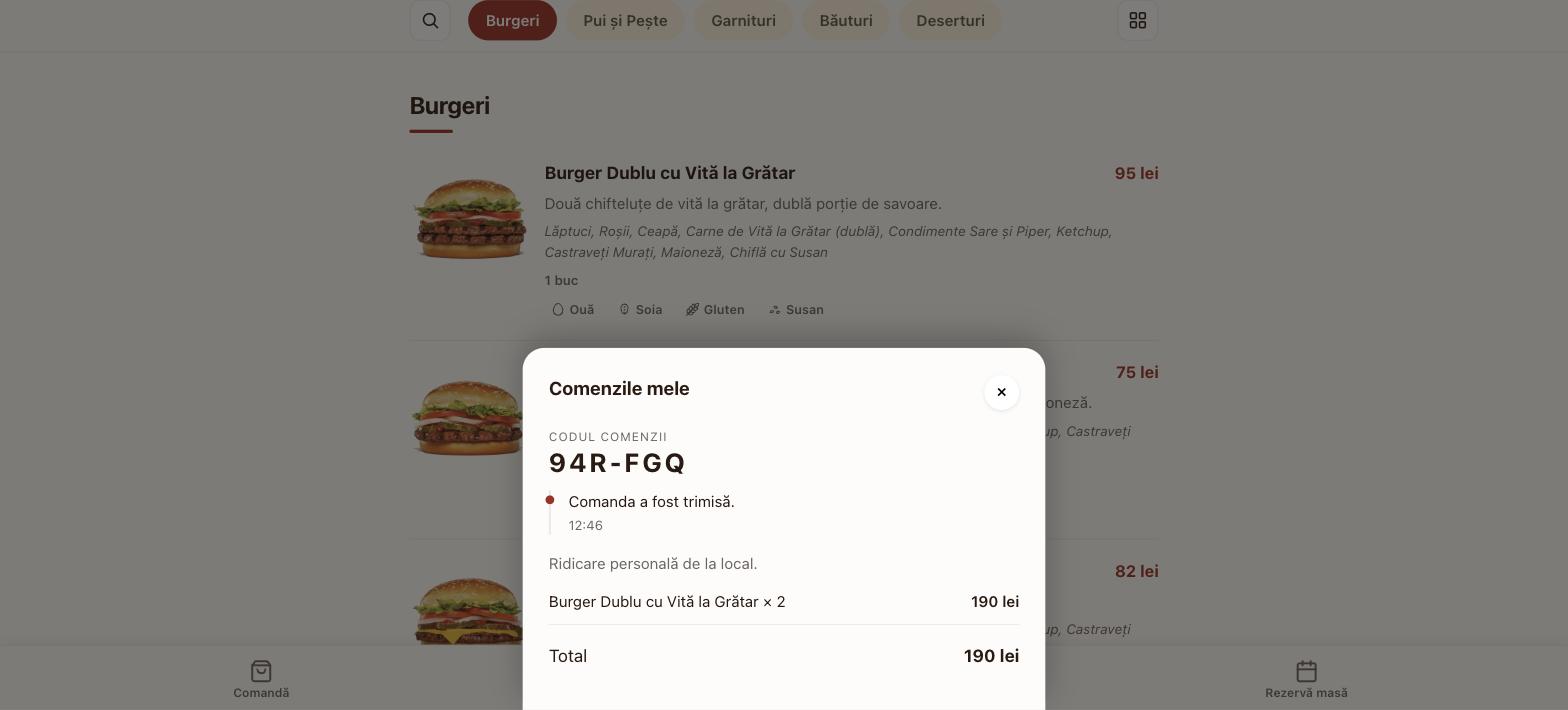
They add the products to the order.
They send the order.
The staff receives the information without a waiter first having to reach the table to write down each product.
Fewer communication errors
A verbally relayed order can go through several steps before it reaches the kitchen.
In a digital system, the products selected by the customer are recorded directly.
This can reduce the situations where misunderstandings arise about product variants, quantity or certain selected options.
The waiter remains important
Digitization doesn’t mean removing staff from the restaurant.
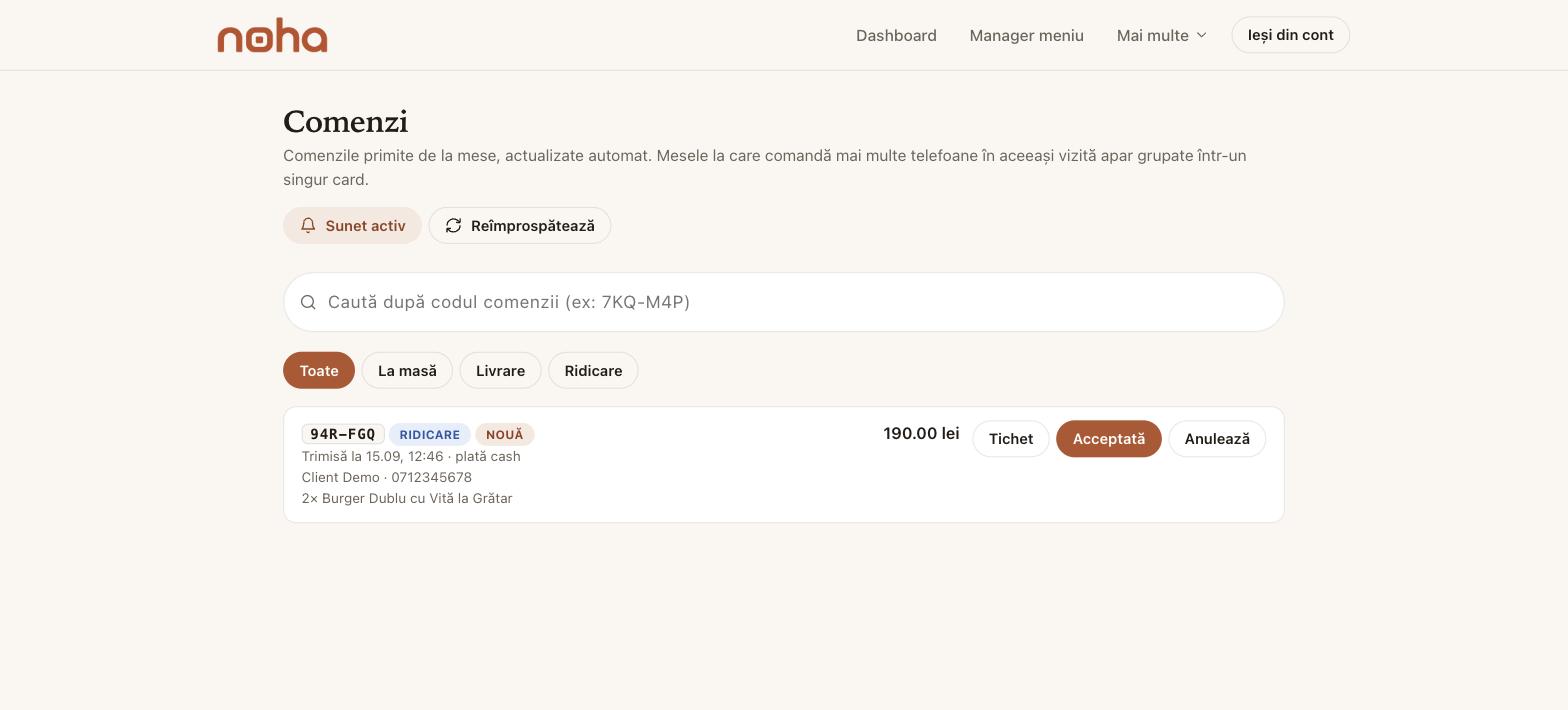
The waiter continues to serve, give recommendations and respond to customers’ requests.
The difference is that some of the repetitive processes can be taken over by the system.
During busy periods, this can help the same team handle more tables more efficiently.
Each restaurant can choose how to use the feature
Not all venues work the same way.
Some can use Noha only as a digital menu.
Others can also enable table ordering.
Others can combine in-restaurant orders with pickup and delivery.
Technology should adapt to the way the restaurant works, not the other way around.